How to Know When Your Hardwood Floors Should Be Refinished Instead of Replaced
If your hardwood floors are scratched, dull, faded, or showing worn paths through the finish, they may not need to be replaced. In many Greenville and Upstate South Carolina homes, professional hardwood floor refinishing can restore the floors you already have for less cost and disruption than a full replacement.
The real question is whether the damage is mostly in the finish, or whether the wood itself has structural problems that refinishing cannot fix on its own.
Here’s how to tell the difference.
Refinishing vs. Replacing Hardwood Floors: The Short Answer
You should usually consider refinishing hardwood floors when:
The floor is scratched, dull, faded, or worn on the surface
The wood is still solid and stable
The boards are not severely warped, rotted, or loose
You want to update the stain color or sheen
You like the existing hardwood and want to keep it
You may need replacement or repair before refinishing when:
Boards are deeply water damaged or soft
Large sections are cupping, buckling, or moving
The floor has been sanded too many times before
There are major gaps, missing boards, or structural issues
The flooring is engineered hardwood with a very thin wear layer
For many homeowners, the answer is not strictly refinishing or replacing. Often, the best solution is targeted hardwood floor repair followed by sanding and refinishing so the floor looks cohesive again.
Signs Your Hardwood Floors Are Good Candidates for Refinishing
The Floors Look Dull, Cloudy, or Lifeless
A dull hardwood floor does not always mean the wood is ruined. In many cases, the finish has simply worn down over time.
Sunlight, foot traffic, pets, furniture movement, cleaning products, and everyday use can all break down the protective finish. Once that finish loses its clarity and strength, the floor starts to look tired even if the wood underneath is still in good condition.
If the boards are flat and stable, refinishing can remove the old finish and reveal cleaner wood underneath.
You See Surface Scratches or Scuffing
Scratches are one of the most common reasons homeowners start searching for hardwood floor refinishing in Greenville, SC.
The good news: many scratches are only in the surface finish. These can often be removed during professional sanding and refinishing.
Refinishing may help with:
Pet nail scratches
Chair and furniture scuffs
Light gouges
Worn traffic paths
General surface wear
Deeper gouges may still be repairable, but they need to be evaluated. Sometimes a damaged board can be patched, replaced, or blended before the entire floor is refinished.
High-Traffic Areas Are Worn Down
Entryways, kitchens, hallways, living rooms, and transitions between rooms usually show wear first. If those areas look gray, faded, or bare compared to the rest of the floor, the protective finish may be gone.
Once bare wood is exposed, it becomes more vulnerable to moisture, staining, and deeper damage. Refinishing at this stage can help protect the floor before the problem becomes more expensive.
If only a small area is worn, a professional can help determine whether a maintenance coat, repair, or full sanding and refinishing is the better fit.
You Want to Change the Color of Your Hardwood Floors
If the floors are in good condition but the color feels outdated, refinishing may be the right path.
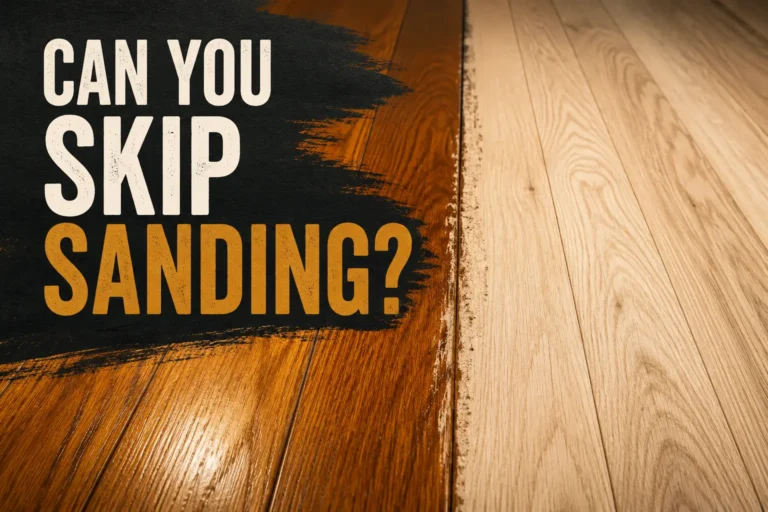
Sanding removes the existing finish and stain so a new color can be applied. This gives homeowners a chance to move away from orange, yellowed, overly glossy, or dated tones without tearing out the floor.
Color changes depend on the wood species, age, previous stain, and condition of the flooring. Some floors take stain more evenly than others, which is why testing and professional guidance matter.
The Floor Has Minor Stains or Discoloration
Not every stain means the floor needs to be replaced.
Light discoloration, sun fading, and some surface stains can often be improved through sanding and refinishing. Darker water stains, pet stains, or deep damage may require board repair or replacement in that area before refinishing.
This is where an experienced flooring contractor can save you from guessing. The goal is to find out whether the stain is sitting near the surface or has penetrated too deeply into the wood.
Signs Your Floors May Need Repair Before Refinishing
Some hardwood floors can be saved, but they need more than sanding alone.
Water-Damaged Boards
Water damage can range from minor staining to serious board movement. If boards are cupped, crowned, buckled, soft, or separating from the subfloor, sanding alone may not solve the problem.
In some cases, damaged boards can be replaced and blended into the surrounding hardwood before refinishing.
Loose, Cracked, or Missing Boards
If individual boards are broken, loose, or missing, those areas should be repaired before the floor is refinished. Otherwise, the final result may look better on the surface but still have underlying problems.
Professional repair is especially important when matching older floors, unusual wood species, or floors that have aged into a specific tone over time.
Deep Pet Stains
Pet stains can be tricky because they often penetrate below the finish and into the wood fibers. Light stains may improve with sanding. Deep stains may still show after refinishing unless the affected boards are repaired or replaced.
A contractor can usually tell during evaluation whether sanding is likely to remove the stain or whether repair is the more realistic option.
Floors That Have Been Sanded Too Many Times
Solid hardwood can usually be refinished multiple times, but not forever. Each full sanding removes a small amount of wood.
If the floor is very thin, the nail heads are close to the surface, or the tongue-and-groove structure is exposed, another full sanding may not be safe.
This is one of the most important reasons to have older hardwood floors inspected before deciding what to do.
When Replacement Makes More Sense
Replacement may be the better option when the flooring has widespread structural damage, severe moisture problems, or too little usable wood left to sand safely.
Replacement may also make sense if:
The layout needs to change
The existing wood species no longer fits the renovation plan
The floor has extensive rot or subfloor problems
The boards are too thin to refinish
The homeowner wants a completely different flooring material
That said, many floors that look “too far gone” to a homeowner can still be restored with the right repairs and refinishing process. It is worth getting an expert opinion before assuming replacement is the only option.
What About Engineered Hardwood?
Engineered hardwood is different from solid hardwood. Some engineered floors can be refinished, but only if the top hardwood layer is thick enough.
A floor with a thin wear layer may only be able to handle a light screen and recoat, or it may not be a good candidate for sanding at all. A thicker engineered hardwood floor may allow for refinishing, but it needs to be evaluated carefully.
If you are not sure whether your floor is solid or engineered, a professional can inspect the flooring and explain your options.
Refinish, Recoat, Repair, or Replace?
Homeowners often think there are only two choices: refinish or replace. In reality, there are several possible solutions.
Screen and Recoat
A screen and recoat refreshes the protective finish without sanding the floor down to bare wood. This can be a good option when the floor has minor surface wear but the stain and wood underneath are still in good shape.
Full Sanding and Refinishing
Full refinishing removes the old finish and surface damage, then allows for new stain and finish. This is the right option for floors with heavier wear, visible scratches, discoloration, or outdated color.
Repair and Refinish
This combines board repair, patching, or blending with full refinishing. It is often the best option when most of the floor is worth saving but certain areas are damaged.
Replacement
Replacement is reserved for floors that cannot be safely or effectively restored, or for homeowners who want a completely different floor.
Why a Professional Evaluation Matters
Hardwood floors can be misleading. A floor that looks terrible may only need sanding and a new finish. Another floor that looks acceptable may have hidden moisture damage, thin boards, or repair needs.
A professional evaluation helps answer questions like:
Is the damage in the finish or in the wood?
Is the floor thick enough to sand again?
Can stained or damaged boards be repaired?
Would a screen and recoat be enough?
Can the floor color be changed successfully?
Is replacement actually necessary?
Palmetto Floor Sanding & Refinishing evaluates the condition of the floor before recommending a solution. That matters because the right answer depends on the floor, the home, and the homeowner’s goals.
Hardwood Floor Refinishing in Greenville and the Upstate
For homeowners in Greenville, Simpsonville, Greer, Easley, Spartanburg, Anderson, and surrounding Upstate communities, refinishing can be one of the most practical ways to improve the look and value of a home without replacing the floors.
Palmetto Floor Sanding & Refinishing provides hardwood floor sanding and refinishing, hardwood floor repair, stain and color changes, screen and recoat options, and professional finish systems for residential and commercial spaces.
If your floors are scratched, dull, faded, or worn, the first step is not guessing. The first step is finding out whether the floors can be restored.
Should You Refinish or Replace Your Hardwood Floors?
If your hardwood floors are mostly scratched, dull, faded, or worn on the surface, refinishing is often the better place to start. If the boards are damaged, stained, loose, or uneven, repair may be needed before refinishing. Replacement is usually only necessary when the floor is too thin, too damaged, or structurally unsound to restore.
Before you tear out hardwood floors, have them evaluated. You may be able to save the original floor, update the color, and protect it for years with professional sanding and refinishing.
Ready to Find Out If Your Floors Can Be Saved?
If you are deciding between hardwood floor refinishing and replacement, Palmetto Floor Sanding & Refinishing can help you understand your options.
Schedule an estimate to find out whether your floors can be refinished, repaired, or restored before you commit to replacing them.
Can badly scratched hardwood floors be refinished?
Yes, many scratched hardwood floors can be refinished if the scratches are mostly in the surface finish or upper layer of wood. Deep gouges, pet stains, or damaged boards may need repair before refinishing.
How do I know if my hardwood floors are too damaged to refinish?
Your floors may be too damaged to refinish if the boards are soft, rotted, severely warped, too thin from past sanding, or structurally unstable. A professional inspection can determine whether repair, refinishing, or replacement is the best option.
Is it cheaper to refinish hardwood floors or replace them?
In most cases, refinishing hardwood floors costs less than replacing them because you are restoring the existing floor instead of removing it and installing new material. The final cost depends on the floor condition, repairs, stain choice, finish system, and project size.
Can hardwood floor refinishing remove water stains?
Refinishing can improve or remove some water stains, especially if the damage is near the surface. Deep black stains, warped boards, or long-term moisture damage may require board replacement or repair before refinishing.
Can I change the color of my hardwood floors when refinishing?
Yes, many hardwood floors can be stained a new color during the refinishing process. The final result depends on the wood species, existing condition, previous stain, and how evenly the floor accepts the new color..
Do engineered hardwood floors need to be replaced instead of refinished?
Some engineered hardwood floors can be refinished, but only if the top hardwood layer is thick enough. Thin engineered floors may only allow a light recoat or may need replacement.