Gym Floor Refinishing: When a Basketball Court Needs Sanding, Recoating, or Full Restoration
If your gym floor looks dull, slippery, scratched, cloudy, or worn through in high-traffic areas, it may need more than basic cleaning. In many cases, a basketball court does not need to be replaced. It may need a maintenance recoat, professional gym floor sanding, or a full refinishing process depending on the condition of the finish, game lines, wood surface, and overall playability.
For schools, churches, recreation centers, training facilities, and commercial gyms, the real question is not just “Does the floor look bad?” It is “Is the floor still safe, consistent, and protected enough for daily athletic use?”
A professional gym floor refinishing contractor can inspect the surface and determine whether the court needs routine maintenance, a screen and recoat, spot repair, sanding, repainting, or full restoration.
Why Gym Floors Need a Different Level of Care
A gym floor is technically a hardwood floor, but it does not perform like the hardwood in a home. Basketball courts and athletic floors are built for movement, traction, impact, visibility, and repeated use. They have to support athletes, coaches, students, spectators, equipment, and constant foot traffic.
That means the finish system matters.
The finish is not only there to make the floor shine. It helps protect the wood, preserve game lines, support proper traction, and keep the surface easier to maintain. When that finish starts breaking down, the court can become harder to clean, less attractive, and less predictable underfoot.
Common signs of finish wear include:
- Dull or cloudy areas across the court
- Slippery spots or inconsistent traction
- Scratches from shoes, chairs, tables, or equipment
- Worn finish near free throw lines, sidelines, entrances, or bleachers
- Faded or damaged game lines
- Gray or dark areas where moisture or wear has reached the wood
- Cupping, warping, loose boards, or dead spots
A floor with light surface wear may only need recoating. A floor with deeper damage, worn-through finish, or outdated court markings may need sanding and full refinishing.
Recoating vs. Sanding vs. Full Restoration
Facility managers often use “refinishing” to describe several different levels of gym floor work. The right option depends on how far the wear has progressed.
Gym floor recoating
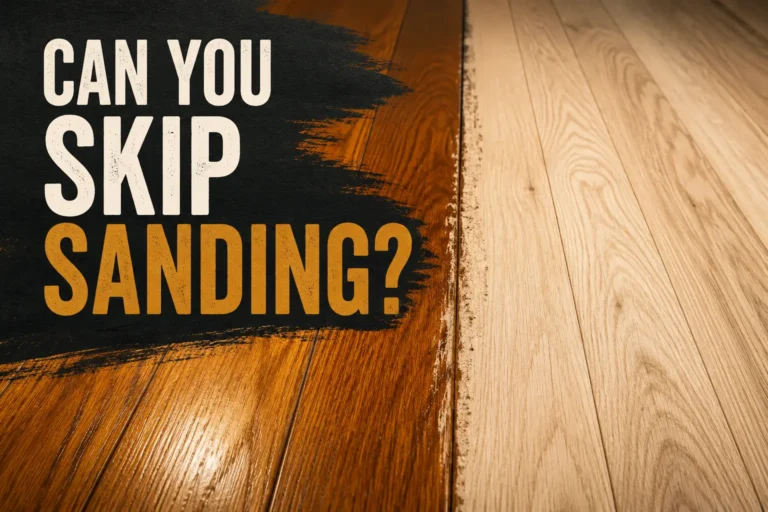
Recoating is a maintenance process that refreshes the protective finish without sanding the floor down to bare wood. The existing surface is cleaned and lightly abraded so a new coat of finish can bond properly.
A recoat may be the right fit when:
- The floor still has intact finish
- The wood is not exposed
- Game lines are in good condition
- The court mostly needs renewed shine, traction, and protection
- There are no major moisture, board, or structural issues
Most gym floors benefit from regular recoating as part of a maintenance plan. It is usually less disruptive than full sanding and can help extend the life of the floor.
Gym floor sanding and refinishing
Sanding and refinishing is a deeper process. The floor is sanded to remove old finish, surface damage, and existing markings if needed. Then the court can be sealed, painted or striped, and finished again.
Sanding may be needed when:
- The finish has worn through to bare wood
- The court has deep scratches or gouges
- Game lines need to be repainted or redesigned
- The floor has heavy discoloration or uneven wear
- Prior coatings are failing, peeling, or not bonding correctly
- The surface needs a full reset for appearance and performance
This is the option many people mean when they ask about gym floor refinishing. It takes more planning, but it can dramatically improve how the court looks and performs.
Full gym floor restoration
Full restoration may involve sanding and refinishing, but it can also include board repairs, moisture evaluation, patching, replacement of damaged sections, court layout updates, and finish system changes.
Restoration is usually considered when:
- The floor has water damage
- Boards are loose, cupped, cracked, or uneven
- There are dead spots or performance concerns
- The court has years of built-up wear
- The facility needs new lines, logos, or sport configurations
- The floor has been neglected or improperly maintained
For older athletic floors, restoration can often preserve the existing court while bringing it back to a safer and more professional condition.
6 Signs Your Basketball Court Needs Professional Attention
Some warning signs are cosmetic. Others can point to safety or performance problems. A gym floor should be evaluated if you notice any of the following.
1. Court feels slick even after cleaning.
Loss of traction is one of the clearest signs that the finish may be wearing down or contaminated. Athletic floors need a surface that allows movement without becoming too slippery or sticky.
2. The finish looks uneven.
If some areas are glossy while others look dull, gray, or cloudy, the finish may be wearing at different rates. This is common in high-use zones such as center court, key areas, sidelines, and entrances.
3. Game lines are faded or damaged.
Lines that are hard to see can affect play, especially in multi-use gyms. If a facility needs new basketball, volleyball, pickleball, or multi-sport striping, sanding and refinishing may be the best time to update the layout.
4. The wood is exposed.
Once the protective finish wears away and athletes are running directly on exposed wood, the floor becomes more vulnerable to dirt, moisture, staining, and deeper wear.
5. Deep scratches, gouges, or drag marks.
Tables, chairs, lifts, bleachers, and equipment can all damage a gym floor when the surface is not protected. Deep damage may not disappear with recoating alone.
6. The floor has moisture damage.
Dark staining, cupping, buckling, or board movement should be inspected before any finish work is done. Coating over a moisture problem will not solve the underlying issue.
How Often Should a Gym Floor Be Refinished?
There is no single schedule that fits every facility. A lightly used church gym and a high-traffic school gym will not need the same maintenance plan.
As a general rule, many athletic wood floors are recoated on a regular annual schedule, while full sanding and refinishing happens much less often. The exact timing depends on use, cleaning habits, finish type, moisture exposure, events held in the gym, and whether the floor has been maintained consistently.
A school gym that hosts basketball, PE classes, assemblies, dances, tables, chairs, and community events will usually wear faster than a court used only for scheduled athletic activity.
The better approach is to inspect the floor before the finish fails completely. Recoating at the right time can prevent unnecessary sanding. Waiting too long can allow damage to reach the wood, which may turn a manageable maintenance project into a larger restoration.
What Happens During Gym Floor Refinishing?
The process depends on the condition of the court, but a full gym floor refinishing project often includes several steps.
First, the floor is inspected. The contractor looks at finish wear, board condition, moisture concerns, game lines, scratches, repairs, and the overall condition of the surface.
Next, the gym is prepared. The space needs to be cleared, protected, and scheduled so the work can be completed without unnecessary interruptions.
Then the sanding or surface preparation begins. For a full refinish, specialized sanding equipment removes the old finish and creates a clean, even surface. For a recoat, the surface is cleaned and abraded so the new finish can bond.
After that, repairs or detail work can be completed. This may include addressing damaged boards, correcting problem areas, or preparing for updated lines.
Court lines, logos, or markings are then painted as needed. Multi-use facilities may use this stage to update court layouts for basketball, volleyball, pickleball, or other activities.
Finally, the floor is sealed and finished. The finish system must be appropriate for athletic use, durability, traction, and the facility’s schedule.
Why Timing Matters for Schools and Facilities
Gym floor work has to be planned around real facility demands. A contractor may need access to the space for preparation, sanding, painting, coating, drying, and cure time. The court may also need to stay closed for a period after finish application before it is ready for play.
For schools, summer and extended breaks are often ideal. For churches, recreation centers, and private facilities, the best window may be built around seasonal downtime, league schedules, tournaments, camps, or planned maintenance closures.
The earlier you schedule an inspection, the easier it is to choose the right window and avoid last-minute pressure before a season, event, or school year begins.
Can a Gym Floor Be Saved, or Does It Need Replacement?
Many gym floors can be restored instead of replaced, especially when the wood surface and subfloor system are still structurally sound. Even floors with heavy wear, faded lines, and dull finish may be good candidates for sanding and refinishing.
Replacement may become more likely when there is severe water damage, widespread board failure, structural problems, repeated moisture intrusion, or a floor system that no longer performs properly. But a worn-looking court does not automatically mean the floor is beyond saving.
That is why inspection matters. A professional can determine whether the issue is mainly finish wear, surface damage, board damage, or a deeper flooring system problem.
What Facility Managers Should Ask Before Refinishing a Gym Floor
Before approving gym floor refinishing, ask a few practical questions:
- Does the floor need recoating, sanding, repair, or full restoration?
- Are the current game lines staying the same or changing?
- Will logos or new sport markings be added?
- How long will the gym be unavailable?
- What finish system is recommended for the facility’s traffic level?
- Are there signs of moisture damage or board movement?
- How should the floor be maintained after the project?
- What should staff avoid after the finish is applied?
These questions help clarify the scope and prevent surprises once the work begins.
Gym Floor Refinishing in Greenville and the Upstate
Palmetto Floor Sanding & Refinishing works with hardwood, commercial, gym, athletic, and specialty flooring throughout Greenville and the South Carolina Upstate. For gymnasium floors, the goal is not only to make the court look better. The goal is to restore a smooth, durable, performance-ready surface that supports the way the facility is actually used.
Whether your basketball court needs a maintenance recoat, gym floor sanding, updated game lines, or full athletic floor restoration, the first step is a professional evaluation.
A worn gym floor may still have many years of life left in it. The key is choosing the right level of service before small surface problems become larger flooring issues.
Want us to take a look at your Gym Floor?
How do I know if my gym floor needs recoating or full refinishing?
If the finish is still intact and the court mainly looks dull or lightly worn, recoating may be enough. If the finish is worn through, the wood is exposed, game lines need replacement, or there are deep scratches and discoloration, sanding and full refinishing may be needed.
How often should a basketball court be recoated?
Many gym floors benefit from regular annual recoating, but the right schedule depends on traffic, maintenance, events, finish type, and facility use.
Can old basketball court lines be changed during refinishing?
Yes. Full sanding and refinishing is often the best time to update court lines, add new markings, change layouts, or refresh logos.
Does gym floor refinishing fix slippery floors?
It can help when slipperiness is caused by worn, dull, contaminated, or failing finish. A contractor should inspect the surface first to determine whether cleaning, recoating, sanding, or a different maintenance approach is needed.
Do gym floors always need to be replaced when they look worn?
No. Many worn gym floors can be recoated, sanded, refinished, or restored instead of replaced. Replacement is usually considered when there is severe water damage, structural failure, or widespread flooring system problems.