Concrete Polishing vs. Garage Floor Coatings: Which Is Better for Your Upstate SC Space?
If you are trying to upgrade a concrete floor, the right choice depends less on what the finish is called and more on how the space will actually be used.
Concrete polishing is usually the better fit for interior concrete floors, commercial spaces, showrooms, warehouses, basements, and areas where you want a durable, low-maintenance surface with a clean, refined look. Garage floor coatings are usually the better fit for garages, workshops, service areas, and spaces that need stronger protection against vehicle traffic, oil, chemicals, moisture, and hot tire pickup.
Both options can make old concrete look better. The real question is which system will perform better in your specific space.
For property owners comparing concrete polishing in Greenville, SC with epoxy, polyaspartic, or other garage coating systems, the best starting point is a professional assessment of the slab, the traffic level, and the kind of wear the floor needs to handle.
What Is Concrete Polishing?
Concrete polishing is a mechanical refinishing process that uses grinding and polishing equipment to smooth, refine, and strengthen the surface of an existing concrete slab.
Instead of covering the concrete with another flooring material, polishing works with the slab that is already there. The surface is ground through progressive stages, and depending on the desired result, it may be densified, sealed, or polished to a matte, satin, or higher-gloss finish.
Polished concrete is often a strong choice for:
- Commercial buildings
- Retail spaces and showrooms
- Warehouses and light industrial spaces
- Finished basements
- Modern residential interiors
- Offices and multi-use spaces
- Concrete floors with dusting, staining, or worn surface areas
The advantage is that polished concrete can create a clean, durable, low-maintenance floor without tearing out the slab or installing a separate flooring product over it. When the concrete is structurally sound, refinishing can often restore and upgrade the floor with less disruption than replacement.
What Are Garage Floor Coatings?
Garage floor coatings are protective systems applied over properly prepared concrete. Common systems include epoxy, polyaspartic coatings, flake broadcast systems, solid color systems, and textured finishes.
Unlike polishing, a coating adds a protective layer over the slab. That makes it especially useful in spaces where the concrete will be exposed to vehicles, tools, oil, chemicals, moisture, and heavier day-to-day abuse.
A garage coating is often the better choice for:
- Residential garages
- Workshops and hobby spaces
- Service bays
- Storage areas
- Commercial garage spaces
- Concrete with stains, pitting, or cosmetic damage
- Floors where slip resistance or chemical resistance matters
- Garages being converted into cleaner, more usable spaces
The most important part of a garage coating is not the color or topcoat. It is the surface preparation underneath. If the concrete is not mechanically prepared correctly, even a good coating can peel, flake, or fail early.
That is why professional diamond grinding, crack repair, surface cleaning, and proper system selection matter so much.
Concrete Polishing vs. Garage Floor Coatings: The Practical Difference
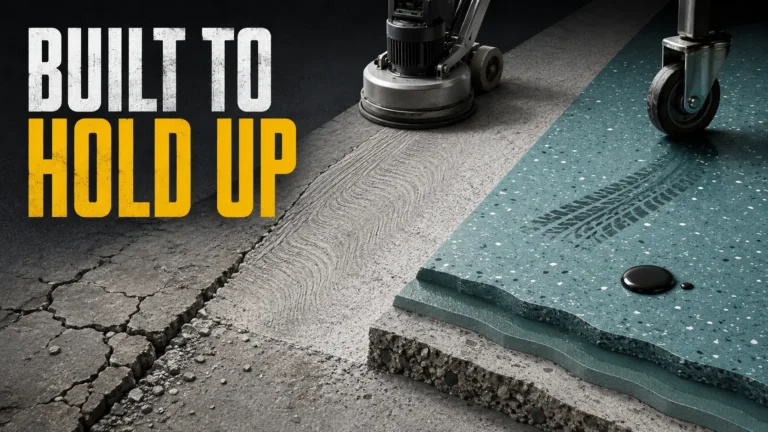
The easiest way to compare them is this: concrete polishing improves and refines the concrete itself, while garage coatings protect the concrete with a built coating system.
That difference affects appearance, durability, maintenance, cost, and long-term performance.
Concrete polishing gives you a finished concrete surface. It can look clean, modern, and professional, especially in commercial and interior spaces. It is not trying to hide the concrete completely. It enhances it.
Garage coatings create a more uniform, protective surface over the concrete. A flake system, for example, can hide imperfections, add texture, improve traction, and create a finished look that feels more like a showroom or workshop floor than bare concrete.
Neither one is automatically better. The better choice is the one that matches the floor’s condition and the way the space will be used.
Choose Concrete Polishing When You Want a Durable Interior or Commercial Floor
Concrete polishing is often the right fit when the slab is fundamentally sound and the goal is to create a long-lasting, low-maintenance surface.
This is especially true in spaces where you want:
- A clean, professional appearance
- A surface that is easier to clean than raw concrete
- Reduced concrete dusting
- A finish that can handle foot traffic, carts, equipment, or daily use
- A modern exposed-concrete look
- Lower maintenance over time
- A surface that does not rely on a thick coating layer
For many commercial spaces, polished concrete makes sense because it holds up well, reflects light, and avoids the need for carpet, vinyl, or other coverings that can wear out in high-traffic areas.
In a residential setting, polished or sealed concrete may work well in basements, interior rooms, utility spaces, or modern home designs where the concrete itself is part of the finished look.
It may not be the best fit, though, if the floor needs heavy chemical resistance, strong texture, major cosmetic coverage, or protection from vehicle fluids and hot tires. That is where coatings usually deserve a closer look.
Choose a Garage Floor Coating When Protection Matters Most
Garage coatings are designed for environments where the concrete takes a beating.
If the space sees vehicles, tools, oil, brake fluid, lawn equipment, storage bins, rolling cabinets, or regular moisture, a coating system may be the better option. It creates a protective surface that can be easier to clean and better suited to everyday garage use.
A professionally installed garage coating can help with:
- Oil and chemical resistance
- Hot tire pickup resistance when the right system is used
- Moisture protection
- Improved cleanability
- Slip-resistant texture
- Better cosmetic coverage
- A more finished look
- Protection for worn or stained concrete
Garage coatings also give property owners more visual control. Flake systems, solid colors, gloss levels, satin finishes, and textured options can all change the final look and feel of the space.
For homeowners in the Upstate who want to turn a garage into a cleaner workshop, home gym, storage area, or finished extension of the home, a coating system usually makes more sense than polished concrete.
What About Epoxy vs. Polyaspartic Coatings?
Epoxy and polyaspartic coatings are both used in garage and concrete coating systems, but they are not identical.
Epoxy is a traditional coating option known for strong adhesion and a durable finish when it is installed correctly. It can work well in many controlled environments and is often used as part of a full coating system.
Polyaspartic coatings are often chosen for faster cure times, UV stability, and strong long-term performance. They can be a good option when the project needs a quicker return to service or better resistance to sunlight and temperature changes.
The best choice depends on the space, the slab, the prep work required, and how the floor will be used. A garage that gets heavy vehicle traffic, sunlight near the door, moisture exposure, or frequent use may need a different system than a lightly used residential storage garage.
The system matters, but the installation matters just as much. A well-prepared coating system will almost always outperform a better material installed over poorly prepared concrete.
How the Condition of the Concrete Affects the Decision
Before choosing polishing or coatings, the slab itself needs to be evaluated.
Important questions include:
- Is the concrete structurally sound?
- Are there cracks, pits, stains, or old coatings?
- Is the slab producing dust?
- Are there moisture concerns?
- Does the surface need grinding or leveling?
- Will the floor be exposed to vehicles, chemicals, or equipment?
- Is appearance, durability, or protection the top priority?
Concrete polishing works best when the existing slab can be refined into an attractive, usable finish. If the slab has heavy damage, deep staining, or many cosmetic flaws, polishing may still be possible, but it may not hide everything.
Garage coatings can do a better job covering imperfections, especially when cracks and pitting are repaired before the coating system is installed. However, coatings still need a sound surface underneath. They are not a substitute for proper prep or repair.
This is why a professional evaluation matters. The wrong system can look good at first and then fail because the floor was never matched to the use case.
Which Option Is Easier to Maintain?
Both polished concrete and garage coatings can be low maintenance compared to raw, unfinished concrete.
Polished concrete is typically maintained with regular cleaning and the right products for the finish. It does not trap dust the way rough concrete can, and it can hold up well in high-traffic spaces when properly processed.
Garage coatings are also easy to clean because spills stay on the surface instead of soaking into the concrete. Oil, dirt, and household chemicals are easier to wipe up when the system is properly installed and sealed.
The difference is what each surface is designed to resist. For commercial interiors and general foot traffic, polished concrete can be very efficient to maintain. For garages, shops, and vehicle spaces, a coating may provide the added protection needed to keep the floor looking better over time.
Which One Lasts Longer?
A properly polished concrete floor can last a long time, especially in spaces where the traffic and maintenance routine match the finish. Because the slab itself is being mechanically refined, there is no thick surface layer that can peel off.
A properly installed garage coating can also last for years, but its lifespan depends heavily on surface preparation, system choice, use, and exposure. When coatings fail early, it is often because the concrete was not mechanically prepared, moisture was not considered, or the wrong product was used for the conditions.
The honest answer is that both can be long-lasting when they are chosen and installed correctly.
The bigger risk is not choosing polished concrete or a coating. The bigger risk is choosing a system that does not match the floor.
When Concrete Refinishing Is the Best Starting Point
Sometimes the right answer is not simply “polish it” or “coat it.”
Concrete refinishing is the broader category. It can include grinding, surface preparation, polishing, sealing, staining, coating removal, dust control, and other steps depending on what the floor needs.
For example, a stained commercial floor may need grinding and polishing. A dusty garage floor may need grinding, repair, and a coating system. A basement may need a grind-and-seal finish instead of full polishing. A warehouse may need surface correction before any final finish is chosen.
That is why Palmetto Floor Sanding starts with the condition of the concrete and the purpose of the space, then recommends the system from there.
For concrete refinishing in Greenville and across the Upstate, the goal should be a floor that performs under real use, not just a surface that looks better for a few months.
The Bottom Line: Match the Floor System to the Space
If you want a clean, refined, low-maintenance concrete surface for an interior, commercial, showroom, warehouse, basement, or modern residential space, concrete polishing may be the better choice.
If you want a tougher protective system for a garage, workshop, service space, or vehicle area, a garage floor coating is usually the stronger option.
If you are unsure, that is normal. Most property owners are not really choosing between product names. They are trying to solve a practical problem: worn concrete, dust, stains, cracking, maintenance, appearance, or durability.
The right contractor should help you understand the slab, compare the options clearly, and choose the system that fits how the space will actually be used.
Palmetto Floor Sanding provides concrete refinishing, concrete polishing, and garage coating services throughout Greenville and the Upstate. If your concrete is worn, stained, dusty, uneven, or ready for a more durable finish, schedule an assessment and get a clear recommendation before committing to a system.
Is concrete polishing the same as concrete refinishing?
Not exactly. Concrete refinishing is the broader process. It can include grinding, polishing, sealing, staining, coating removal, surface preparation, and other steps. Concrete polishing is one type of concrete refinishing.
Is polished concrete better than epoxy for a garage?
Usually, a garage floor coating is a better fit for a garage because it adds a protective system over the concrete. Polished concrete can work well in many interior or commercial spaces, but garages often need more resistance to vehicles, oil, moisture, and hot tire pickup.
What is the best concrete finish for a commercial space?
It depends on the traffic, appearance goals, and maintenance needs of the space. Polished concrete is often a strong option for retail, showroom, warehouse, and commercial interiors because it is durable, clean-looking, and low maintenance.
Why do garage floor coatings fail?
Garage floor coatings often fail because the concrete was not prepared correctly. Skipping mechanical grinding, ignoring cracks or moisture, or applying the wrong coating system can cause peeling, flaking, or poor adhesion.
Can old concrete be polished or coated?
In many cases, yes, as long as the slab is structurally sound. The concrete should be evaluated first for cracks, stains, surface damage, moisture concerns, old coatings, and overall condition before choosing polishing, sealing, or a coating system.
How do I choose between concrete polishing and a garage floor coating?
Start with how the space will be used. Choose concrete polishing for clean, durable interior or commercial concrete surfaces. Choose a garage floor coating when the space needs stronger protection from vehicles, tools, chemicals, moisture, or heavy garage use.